
Informed Choices, Emotional Awareness, and the Slowing of Labor 

Empower yourself with knowledge and compassion. This class dives into informed consent, revealing what many providers might not share about common interventions, and explores the emotional and spiritual sides of birth. Understand how fear, anxiety, and medical choices can impact both labor progression and the postpartum journey.

The image depicts a serene birthing room bathed in soft natural light In the foreground a doula a middleaged woman with warm compassionate eyes gently holds the hand of a laboring mother who appears both focused and relaxed The mother her hair tied b-1

What You Will Learn

Collaborative doula support in action

Informed Consent

  • Explanation: Understanding your rights during labor is essential. We’ll discuss how to ask questions, clarify procedures, and make decisions that honor your personal values and beliefs. You’ll learn practical ways to advocate for yourself or your birthing partner.

  • Focus Points:

    • Knowing common interventions and their potential benefits and risks

    • How to give informed consent or decline procedures

    • Communication strategies with your birth team

mom in labor with folded hands praying

The Emotional and Spiritual Side Of Birth

  • Explanation: Birth is not only physical—it is deeply emotional and spiritual. Emotions such as fear, anxiety, and stress can affect labor progression and postpartum recovery. We’ll explore ways to recognize these feelings and use faith, mindfulness, and support to navigate them.

  • Focus Points:

    • How fear and anxiety can impact labor hormones and contractions

    • Spiritual practices and affirmations to promote calmness and confidence

    • Preparing emotionally for unexpected outcomes

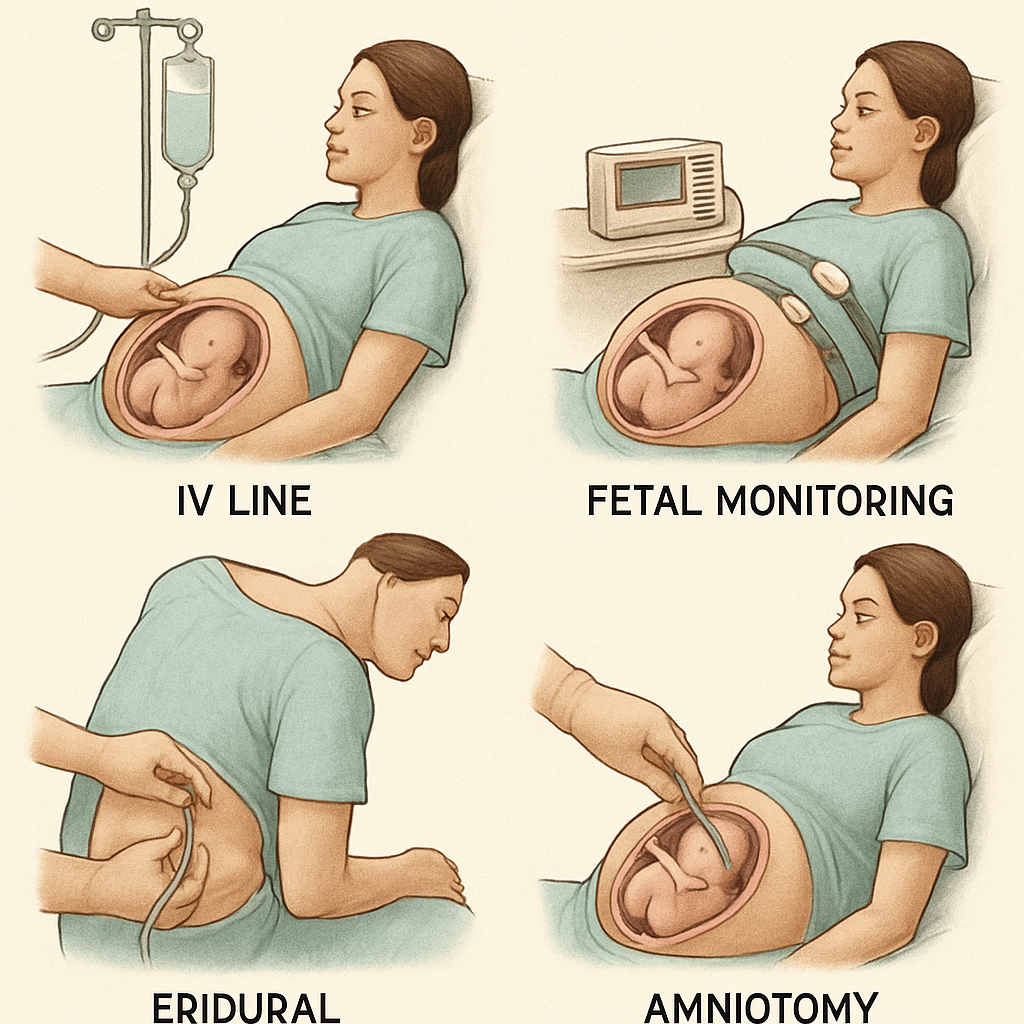
image depicting a pregnant woman with an IV line, fetal monitoring, epidural, and amniotomy caption reading Medical interventions and labor preparedness

Medical Interventions and Labor Preparedness

  • Explanation: Medical interventions are sometimes necessary, but it’s important to understand how they may affect both labor and maternal mental health. We’ll cover what providers may not always explain, empowering you to make informed decisions.

  • Focus Points:

    • Common interventions: induction, epidurals, cesarean sections

    • Potential effects on labor duration and postpartum recovery

    • Strategies to minimize unnecessary interventions

woman in labor-1

Understanding why labor slows

  • Explanation: Labor doesn’t always follow a predictable timeline. We’ll discuss the physical, emotional, and environmental factors that can cause labor to slow or stall, and evidence-based ways to gently encourage progress.

  • Focus Points:

    • Effects of fear, positioning, hydration, and movement on contractions

    • Gentle techniques: movement, touch, relaxation, and breathing

    • When to seek medical guidance

Ready to learn about class 5

Frequently Asked Questions

What does informed consent mean in the context of childbirth?
It means understanding your rights, your options, and ensuring you make decisions that align with your values and needs during labor.
How can medical interventions affect labor progression?
Some interventions may slow down labor or impact maternal mental health. We cover evidence-based strategies to help encourage natural progress.
What gentle strategies can help when labor slows down or stalls?
Our class discusses a range of gentle, evidence-based techniques that can support the natural progression of labor while respecting your unique journey.
How does emotional awareness impact the labor and postpartum journey?
Emotional awareness helps you manage fear and anxiety, fostering a supportive environment that benefits both the labor process and your postpartum recovery.